
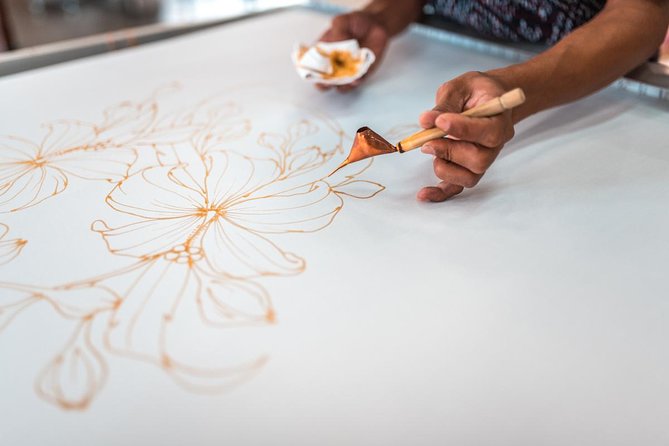
Reviewed · TOURS IN KUALA LUMPUR
Malaysian Batik Experience-Handkerchief
Batik starts with a line of wax, but making that line steady is the real test. At Jadi Batek Gallery, you’ll hear how the traditional process works, choose a pattern and colors, and create a piece of fabric with a canting tool and paint. No art skills are needed, though a steady hand helps.
I like two things in particular: you make something yourself, with an instructor there to help at each stage, and you get a useful introduction to Malaysian batik rather than just a look at finished work. The choice of templates also lets you focus on the craft instead of worrying about drawing a design from scratch.
One practical catch: the two-hour session may not include the final finishing. If you want the wax removed so the pale outlines show, or you want a washable handkerchief, you may need to return the next day or allow about four hours. If you’re leaving Kuala Lumpur soon, plan for that before you book.
- Use a canting tool: Apply hot wax along your design, following a method used for more than a century.
- Choose a template or draw: Pick from prepared designs or sketch your own pattern.
- Mix your own colors: Paint with fabric dyes from the workshop, including custom mixes.
- Expect hands-on help: Staff explain each step and offer individual guidance as you work.
- Plan around the finish: You can take the fabric with wax still on it, but a fully finished, washable piece may take extra time.
- Pay $17 per person: Tools, materials, GST, bottled water and snacks are included.
From gallery introduction to your own design
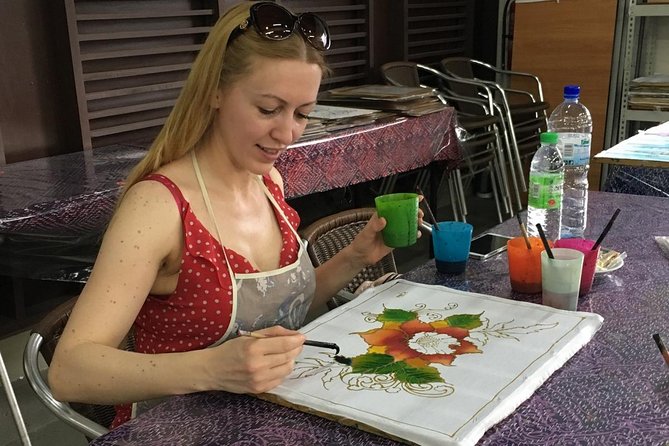
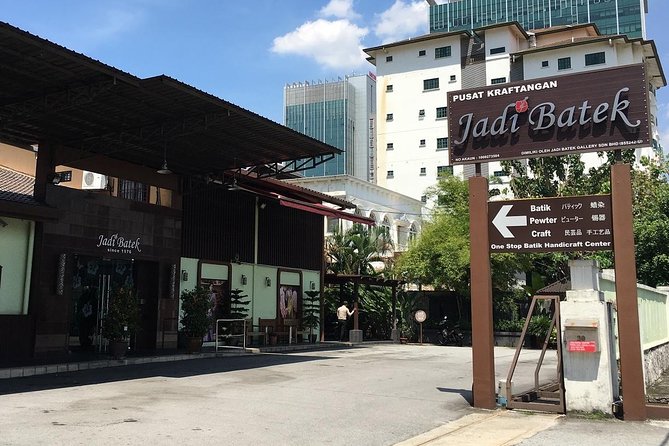
The experience begins at Jadi Batek Gallery, at 30 Jalan Inai in the Imbi area of Kuala Lumpur. You meet the staff there, hear a short introduction to batik’s history and process, and get a look at the stages that turn plain fabric into patterned cloth.
That opening context is useful. Batik is not simply painting on fabric: the wax helps define the design, and the order of the work matters. Seeing the materials and hearing the explanation first gives you a better sense of what each tool is for before you start.
The activity is private for your group, rather than a shared class with strangers. That can make it easier to ask for help or work at your own pace. The session is listed at about two hours, though one group was allowed extra time while painting. Treat that as a possibility, not a promise, and leave room in your schedule if you don’t want to rush.
Choosing a pattern that feels like yours
Once the introduction is over, you sketch the design onto your fabric. You can draw freely or use one of the supplied templates. The templates are a practical option if you’re not confident with a pencil, and they give you a clear pattern to follow through the wax and color stages.
You don’t need to arrive with an artistic plan. Staff offer inspiration and help you choose, and there are many designs and colors to consider. If you prefer to make something more personal, a freehand sketch lets you shape the piece yourself. Either route works; the main choice is how much you want to invent before you begin.
The product is described as a handkerchief experience, while the workshop instructions refer to designing a batik scarf. In practice, you make a decorated piece of fabric that can be finished for different uses. Ask the staff about the finish you want before starting, especially if you have a particular use in mind.
Other things people book around Kuala Lumpur:
- Kuala Lumpur: Batu Caves Half-Day Tour with Pick-Up Option
★ 4.5 · 4,288 reviews - Private Half-Day Batu Caves and Cutural Tour in Kuala Lumpur
★ 5.0 · 3,107 reviews - Sambal Streets Kuala Lumpur Food Tour with 15+ Tastings
★ 5.0 · 2,438 reviews
Working the canting and hot wax
The most distinctive part of the session is tracing your design with a canting, a traditional tool used to apply hot wax. You guide the tool along the lines of your sketch, creating wax barriers that shape the final pattern. The method has been used for more than 100 years, and trying it yourself makes the process easier to understand than simply seeing finished batik on a rack.
This is also where patience matters. Waxing calls for a steady hand, and it may feel more exacting than the relaxed creative class you imagined. That isn’t a reason to avoid it. Staff demonstrate the technique and help as needed, so you can make a few imperfect lines without the project turning into a test of drawing skill.
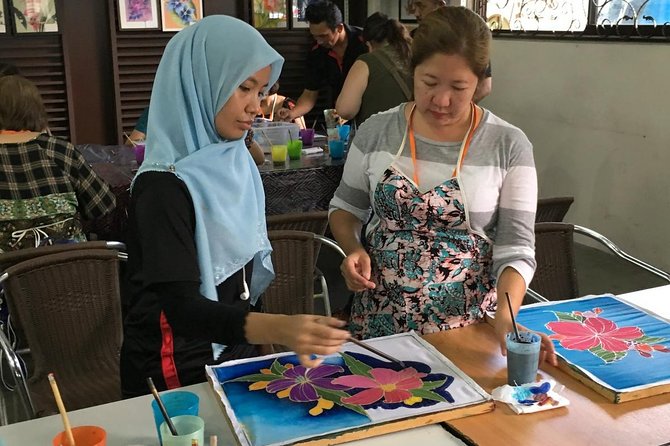
The instructors’ support is one of the experience’s strongest features. The guidance is described as clear and easy to follow, with help available throughout rather than only at the start. If you want to ask whether Ms. Carol is available, one staff member named in a recommendation, you can check when you arrive; the assigned instructor is not guaranteed.
Painting with workshop dyes
After waxing, you paint the fabric with the workshop’s fabric dyes. You can choose from the colors on hand and mix custom shades, so the finished work can be as simple or colorful as you like. This is the more free-flowing part of the session, though the waxed lines still guide how the design takes shape.
You’ll have room to make the piece your own, but don’t expect a polished factory result from a short class. Batik is a craft, and the appeal is partly in the hand-drawn character of your work. If you want a dependable outline and a clear design, choose a template. If you’d rather experiment, the option to draw and mix colors gives you more freedom.
The process is suitable for families, and one participant found it appropriate for primary-school-age children and up. The hot wax and need for a steady hand are worth keeping in mind, so younger children may need close help. The staff are there to guide you, but this is a real making activity, not a paint-and-leave craft table.
The finished fabric and the timing question
At the end of the drawing and painting, staff can dry the fabric quickly so you can take it with you. That faster option is handy if your schedule is tight, but the wax remains in the fabric. If you want the wax removed to reveal clean pale outlines, the piece needs more time for finishing.
The timing varies according to what you want to take home. The workshop information says to allow four hours or return the next day if you want to use the piece as a handkerchief. One participant collected a fully finished item the next morning, and another took home a piece with the wax still on because a flight was coming up. The useful rule is simple: ask before you begin which finish is possible on your schedule.
You can also pay RM10 to have the edge sewn. Courier delivery is available for an extra fee that depends on the destination. Those options may be worthwhile if you want a more finished textile or cannot return to the gallery, but neither is included in the $17 price.
Same city, a different kind of day:
- Historical Malacca Guided Day Tour (Shared Tour)
★ 5.0 · 2,172 reviews - Kuala Lumpur: Sambal Street Food Tour with 15+ Tastings
★ 4.9 · 1,657 reviews - From Kuala Lumpur: Batu Caves Cultural Temple Tour
★ 4.7 · 1,453 reviews - Genting Highland & Batu Cave Guided Day Tour (SIC/Shared Tour)
★ 5.0 · 1,289 reviews
A calm creative break in central Kuala Lumpur
The workshop offers a welcome change of pace from sightseeing. You sit down, focus on a pattern and work through a series of tactile steps. The setting is described as a large, cool indoor space, which makes this a sensible activity on a hot day. Bottled water and snacks are included, so you don’t need to bring supplies.
It also gives you a closer look at Malaysian craft than shopping alone can provide. You learn the basic process, handle the tools and leave with a piece you made. You can see batik work in the gallery as well, and the shop sells items such as scarves, tops and shorts if you want to browse after class. Buying something is optional; the class itself is the main event.
The location is near public transportation, but transport to and from the gallery is not included. The activity starts and ends at the same address, so you’ll need to make your own way there. Check the address and allow enough time to arrive before your session.
What $17 buys you
At $17 per person, the price covers the instruction, tools, materials, GST, bottled water and snacks. That’s a fair package for a two-hour activity, especially since you leave with a piece you’ve made rather than only a memory or a demonstration. The value is strongest if you enjoy learning by doing and are happy to spend time on the process.
The price does not include transport, sewing the edge or courier delivery. The biggest possible extra cost is not necessarily a fee, but the time needed to collect the finished piece. If you have a tight departure schedule, the option to take the work with wax still on it may be more useful than paying for delivery, depending on your needs.
The class is listed with a 4.9 rating from 37 ratings and a 100 percent recommendation rate. The recurring strengths are practical: clear instructions, friendly help, a wide choice of patterns, and a relaxed pace. Those qualities matter here because batik takes more than a quick explanation. You want someone nearby when you’re guiding hot wax over a small design.
Who should book this class?
I’d choose this experience if you want a hands-on introduction to Malaysian craft, enjoy making things, or need a thoughtful indoor activity between city outings. It suits first-timers because you can use a template and ask for help. It also works for families with older children who can follow instructions and handle a careful, steady task.
You may want to skip it if your main goal is a fast, polished souvenir with no follow-up. The class is not difficult to join, but the wax work takes attention, and final finishing can extend beyond the scheduled two hours. Anyone flying out soon should ask whether the fabric can be collected in time and what it will look like if taken home with the wax still on.
Should you book the Jadi Batek experience?
For $17, this is a good-value way to learn the basic stages of batik and make a personal textile with help close at hand. Book it if you’re curious about the craft and willing to give the process time. Before you confirm, decide whether you want a quick-dried piece or a fully finished, washable one, then plan your Kuala Lumpur schedule around that choice.
FAQ
How long does the batik experience take?
The session lasts about two hours. The final drying and finishing can take longer, and one group was able to spend extra time painting.
What is included in the $17 price?
Tools, materials, GST, bottled water and snacks are included. Transportation, edge sewing and courier delivery are not included.
Do I need experience in drawing or batik?
No experience is necessary. Staff guide you through the process, and you can choose a prepared template instead of drawing a design from scratch.
What is a canting?
A canting is the traditional tool used in the workshop to apply hot wax along your design. The method has been used for more than 100 years.
Can I take my batik home after the session?
Staff can quickly dry the fabric so you can take it home, but it may still have wax on it. A fully finished piece can require more time.
Do I need to return to collect a handkerchief?
If you want to use the fabric as a handkerchief, allow about four hours or return the next day for the final piece.
Can the workshop sew the edge or send the fabric to my home?
Edge sewing is available for RM10. Courier service is also available for an additional fee based on the destination.
Where does the experience start and end?
It starts and ends at Jadi Batek Gallery, 30 Jalan Inai, Imbi, Kuala Lumpur. Transportation to and from the gallery is not included.
Just added around Kuala Lumpur
- Kuala Lumpur: Bird Park Day Ticket & 1-Way Transfer★ 4.7 · 15 reviews
- Kuala Lumpur: Evening Food Tour by Bike★ 5.0 · 13 reviews
- Sunway Lagoon Theme Park with Round-Trip Transfer★ 4.6 · 13 reviews
- Bird Park & Butterfly Farm Nature Include All Entrance Tour From Kuala Lumpur★ 4.5 · 7 reviews
- Bird Park & Butterfly Farm Nature Tour From Kuala Lumpur★ 3.5 · 3 reviews
- Backcountry Cycling★ 5.0 · 10 reviews
- Ipoh Historical & Food Day Tour from Kuala Lumpur (Private Tour)★ 4.5 · 14 reviews
- Orang Utan Island and Perak Tong Cave Temple Day Tour from Kuala Lumpur★ 4.5 · 11 reviews
Tours in Kuala Lumpur: the other options.

Private Half-Day Batu Caves and Cutural Tour in Kuala Lumpur
Read our review →
Sambal Streets Kuala Lumpur Food Tour with 15+ Tastings
Read our review →
Historical Malacca Guided Day Tour (Shared Tour)
Read our review →


Genting Highland & Batu Cave Guided Day Tour (SIC/Shared Tour)
Read our review →
Other lists this tour sits on